How WMP Elevated Efficiency, Quality, and Safety for an Automotive Customer
Waukesha Metal Products is a contract manufacturing company working in multiple industries. Automotive, energy, energy storage, security, healthcare, industrial, and HVAC manufacturers rely on WMP as a supplier of complex metal-formed parts and assemblies.
One automotive customer presented a situation that demanded more. Increased volumes were coming, expectations were rising, and zero defect was assumed.
The existing process met volume requirements. Internally, however, it did not meet WMP’s expectations from an efficiency and quality standpoint. For a company focused on manufacturing excellence, closing that gap was non-negotiable.
As Chris Zuzick, Vice President at WMP, explained, “We designed a process that allowed us to meet the volume expectations for the customer, but ultimately did not meet our internal expectations from efficiency and quality.”
Establishing Automotive Contract Manufacturing Excellence Through Automation

The volume increase created what Zuzick described as a “perfect opportunity” to establish core competencies for Waukesha Metal Products — focusing on manufacturing excellence, zero defect, optimizing direct labor, and celebrating automation within the system.
Automation had been part of WMP’s operations for years. Still, this program presented a compelling case to look at the best way to provide value to the customer.
Efficiency and quality are the key things when looking at manufacturing. Improving efficiency improves the bottom line. Improving quality reduces risk.
Engineering the Turnkey Automated Assembly Cell
WMP identified the need. HUSCO AMG, an experienced automation integrator with deep manufacturing expertise, engineered the solution.
Both teams collaborated to define the problem clearly before designing the system. Requirements were established around repeatability, labor optimization, and zero-defect performance. HUSCO built the automated cell from the ground up and delivered a turnkey integration tailored to WMP’s production environment.
Zuzick emphasized the importance of partnership in the process, stating, “We really look at excellence with regard to how we provide support for our customers, and HUSCO is a perfect example of that.”
Manufacturing expertise on both sides accelerated development. HUSCO operates its own production environment and understands the realities of a manufacturing floor; this shared experience shortened the learning curve.
Zachary Schwarze, Advanced Manufacturing Engineer at WMP, noted: “They knew exactly where to go when trying to help another manufacturer.”
Automation projects often involve a “get to know each other” phase. Alignment around the best quality and the best process for the customer made this collaboration effective. When unforeseen challenges surfaced, both teams adapted quickly and maintained focus on performance.
WMP did not outsource responsibility. It partnered with experts to elevate the system.
Redefining the Stamping Process to Overcome Labor Constraints
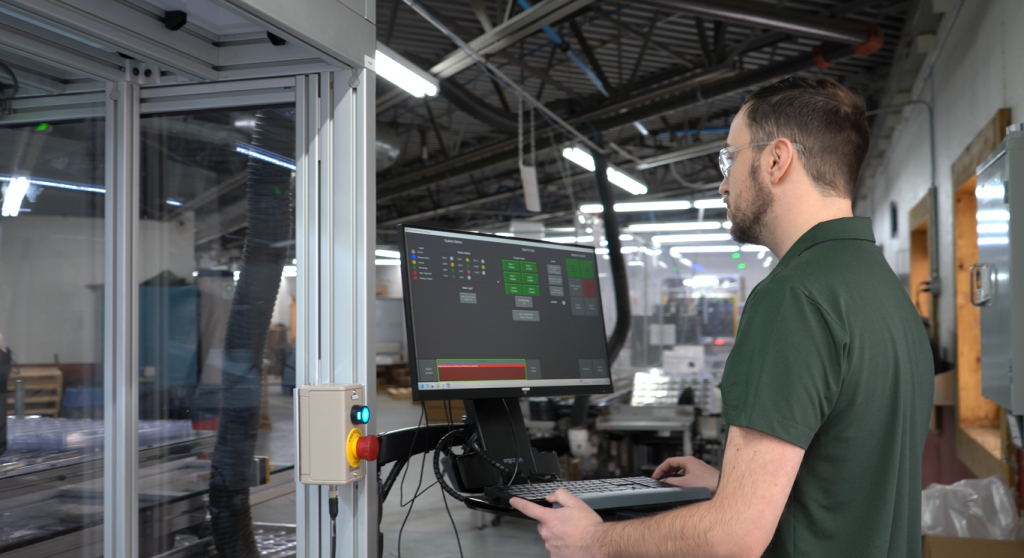 Schwarze, who served as project lead, explained, “We were looking at a process in our building that was currently under what we would consider internal expectations. So we started this project together, designing the problem and going over what the solutions might look like.”
The team evaluated a direct labor-dependent process staffed by multiple operators performing repetitive tasks. Skilled operators were spending their days doing small, repeatable motions when their impact could be greater elsewhere.
Schwarze put it plainly: “We have some really skilled, highly talented operators who were spending their days doing small, repetitive tasks when we could use them for quality inspection and other more important tasks.”
Direct labor is a big challenge for many manufacturers today. Deploying people in different areas for their own development — and to benefit the company — creates long-term strength.
Automation offered a path forward.
From Manual Variability to Repeatable Automotive Component Manufacturing
The finished automated cell consolidated a multi-operator process into a single, controlled system.
Yield rates moved from the low 90% range to over 99%. Scrap declined significantly. Process performance statistics almost doubled. Internal evaluations indicated roughly a 10 to 15 percent improvement in quality performance.
Schwarze explained, “Since implementing this new process, we’ve seen our yield rate go over 99%.”
Reducing deviation from station to station and operator to operator created repeatability that manual handling could not match.
Optimizing Direct Labor and Advancing Technical Workforce Skills
Operational gains extended beyond quality metrics.
The previous process relied heavily on direct labor. The new system allows operators to oversee performance rather than perform repetitive tasks. Hours that were once tied to a single product can now support other areas of the building.
“Being able to move some people around in different areas is very positive,” Zuzick said.
Deploying labor in different areas benefits both the company and the team members themselves. Education expands. Skill sets broaden. Capacity improves.
Automation in this case augmented operators instead of sidelining them.
Mitigating Risk for Safety-Critical Automotive Components
The component produced through this process plays a role in vehicle safety.
WMP stamps aluminum and applies an absorber used in systems that help the camera communicate with the driver — supporting lane departure, adaptive cruise control, and related safety functions.
Because the part enters a vehicle environment, risk tolerance is minimal. “Our mentality with quality is zero defect,” Zuzick emphasized. “This system allows us to have a level of assurance.”
Everything WMP touches on this program is designed with protecting the person driving that vehicle in mind. Limiting risk in the part through material choice and process control remains critical.
Capital Investment, Measurable ROI, and Long-Term Growth
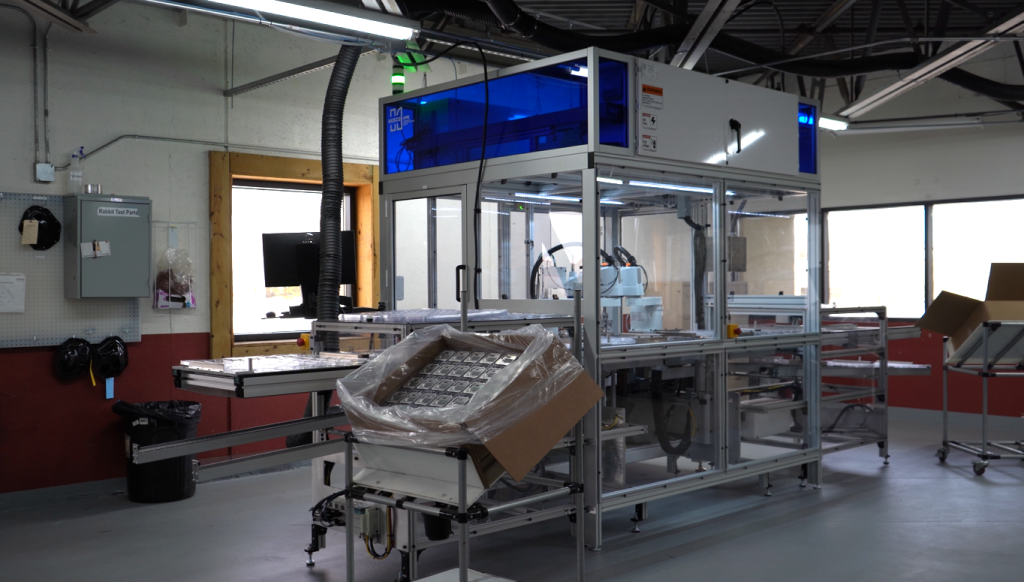
Improving efficiency improves the bottom line. Improving quality strengthens the customer relationship. Making visible investments signals commitment.
The capital investment exceeded half a million dollars. Payback was projected at roughly a year once scrap reduction and efficiency gains were factored in.
Automation will continue shaping WMP’s operations over the next decade and beyond. As volumes grow and expectations increase, the ability to address labor constraints, improve efficiency, and support manufacturing excellence will define competitive advantage.
“What I see here is an opportunity for us to go to other customers and show them that we’re willing to make investments in our processes,” Zuzick said.
Driving Downstream Predictability and Supply Chain Confidence
For the automotive customer, the benefit extends beyond WMP’s walls.
“They get a more predictable product from us,” Schwarze explained, “which means they can drive efficiencies on their product lines, because our product is going to be more predictable every time they receive it.”
Predictability reduces downstream disruption; consistency strengthens supply chain confidence.
Manufacturing Excellence: Mastering Complex Stamping Applications
When asked to describe the project in one word, Zuzick answered: “Excellence.”
Thoroughness guided the effort from concept through launch, and lessons learned informed decisions. The focus remained on manufacturing excellence, zero defect, and long-term value.
Leveraging Process Engineering for Complex Stamping Applications
Increased volumes, safety-critical applications, labor constraints, and evolving internal standards require more than incremental adjustments.
WMP approaches those situations as opportunities to elevate the entire system.
Stamping capability forms the foundation. Automation integration, process engineering, capital deployment, and workforce strategy expand what is possible.
Manufacturing excellence, zero defect, and long-term value remain the standard — not the exception.
Contact WMP
Powered by Vive Marketing